
The Dawn of the Stalin Era!
In his first 48 hours as Chief Minister, M.K. Stalin has moved swiftly to address the immediate challenges facing Tamil Nadu, particularly the raging COVID-19 pandemic, while signalling a people-centric approach to governance.
Here are the key measures announced and implemented in the initial phase of his leadership:
– Financial Relief: Rs 4,000 in financial assistance to 20.7 million ration cardholders to help them cope with pandemic-induced hardships. The first instalment of Rs 2,000 will be distributed in May, with the remainder to follow later.
– Free Travel for Women and Transgender Persons: Women and transgender individuals can now travel free of cost on all state-owned buses.
– Milk Price Adjustment: The price of Aavin milk has been reduced by 10%, while the milk procurement rate for farmers has been increased by 14%.
– Grievance Redressal Mechanism: The Chief Minister in Your Constituency scheme has been launched. A dedicated department, headed by IAS officer Shilpa Prabhakar, will address public grievances within the first 100 days. The grievances were collected during Stalins election campaign outreach.
– Health Insurance Expansion: The Chief Ministers Comprehensive Health Insurance Scheme has been extended to cover COVID-19 treatment in private hospitals for existing beneficiaries.
– Recognition for Journalists: Journalists working in television, print, and radio have been declared frontline workers and will receive all associated rights and privileges.
– Health Infrastructure Boost: Bed capacity, oxygen supply, and essential drugs have been ramped up. An 800-bed facility with oxygen support is being set up in Chennai, with 300 beds becoming operational from May 10.
– Request to Centre: Stalin urged Prime Minister Narendra Modi to increase Tamil Nadus oxygen allocation to 500 tonnes per day.
– Lockdown Strategy: A well-planned 15-day lockdown has been announced to curb the spread of the virus, while ensuring public transport continues to function smoothly.
– Support for Frontline Workers: PPE kits have been provided to policemen. A war room has been established to coordinate COVID-19 control and prevention efforts. Additionally, 1,212 contract staff nurses have been regularised and posted in Chennai to meet rising manpower needs. Rs 59 crore has been allotted for COVID-19 prevention and control across the state.
– Essential Services During Lockdown: Amma canteens will remain open during the lockdown period.
– Medicine Monitoring: The sale of the antiviral drug Remdesivir is being strictly monitored to prevent black-marketing. The government will ensure its availability in Chennai, Coimbatore, Salem, Tiruchirappalli, Madurai, and Tirunelveli.
– TASMAC Closure: All TASMAC outlets will remain closed for the duration of the lockdown.
– Oxygen Supply Assurance: Uninterrupted supply of oxygen to hospitals has been prioritised.
In the next 24 hours, Stalin announced the appointment of the Chief Secretary and a temporary Assembly Speaker. He also ensured that the first session of the 16th Tamil Nadu Legislative Assembly would be held at the earliest possible date – May 11 – at Kalaivanar Arangam in Chennai.
Addressing the public, he sought the cooperation of the people of Tamil Nadu and described himself not as Chief Minister but as a chief frontline worker. He also decided to hold meetings with bureaucrats and ministers even on Sundays. Strict penalties, including fines and up to six months imprisonment, have been introduced for private bus operators charging exorbitant fares.
While cinema has often portrayed chief ministers delivering miraculous transformations in a single day, real-world governance demands sustained effort. Whether the media will objectively highlight these early initiatives, developmental works, and progressive changes remains to be seen.
The Stalin governments communication strategy – often criticised by the opposition – has been effective in keeping citizens informed about government actions. For the first time in Tamil Nadus political history, a Chief Minister is speaking the language of the common man, focusing on action rather than rhetoric.
As American journalist Bill Moyers observed: “We talk about problems, issues, policies, but we dont talk about what democracy means – what it bestows on us – the revolutionary idea that it isnt just about the means of governance but the means of dignifying people so they become fully free to claim their moral and political agency.”
These initial steps have helped restore faith among various sections of society by placing people at the centre of governance. It marks a promising beginning to the Stalin era.
48 Hours of Stalin’s rule in Tamilnadu-Kathir RS

In his first 48 hours as Chief Minister, M.K. Stalin has announced a series of swift measures to tackle the COVID-19 crisis and deliver relief to the people of Tamil Nadu.
Key initiatives include ₹4,000 financial assistance to 20.7 million ration cardholders, free bus travel for women and transgender persons, a 10% reduction in Aavin milk price, and the launch of the ‘Chief Minister in Your Constituency’ grievance redressal department.
Additional steps cover expanded health insurance for COVID treatment, recognition of journalists as frontline workers, increased oxygen supply, a 15-day lockdown with essential services running, and strict monitoring of Remdesivir to prevent black-marketing.
Stalin described himself as a “chief frontline worker” and promised people-centric governance.
A promising and action-packed beginning to the Stalin era.
+9
Spread the love


More Stories
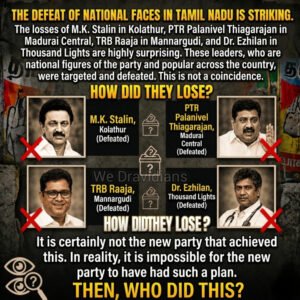
But… how did they lose? Who planned this?
Karur Stampede: TVK’s Post-Tragedy Controversies Exposed
From Pudukkottai to Parliament: M.M. Abdulla’s Voice for the Voiceless